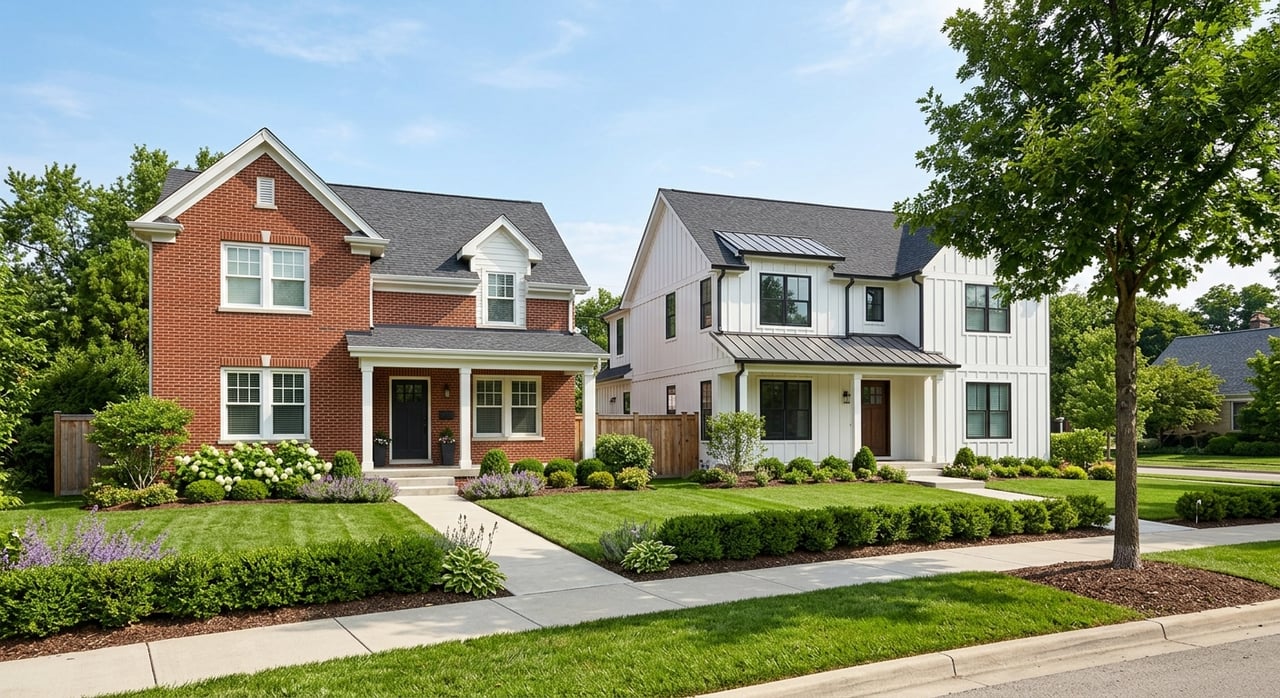
If you are trying to choose between Maineville, Monroe, and Lebanon, you are not really picking a single "best" town. You are deciding which kind of daily life fits you best. Some buyers want easier interstate access, some want newer suburban housing, and some want a more historic downtown setting. This comparison will help you look at all three corridor hubs through the lens that matters most: how you want to live, commute, and shop for a home. Let’s dive in.
Why these three towns compare well
Maineville, Monroe, and Lebanon all sit within Warren County’s broader Cincinnati-Dayton corridor. Warren County notes that local transit resources connect residents to both Cincinnati METRO and Dayton’s GDRTA for trips outside the county service area, which reinforces how these communities function within a larger regional network rather than as isolated places. You can see that county context on the Warren County overview page.
That is why this comparison matters for buyers and sellers alike. On paper, home values are fairly close. In practice, the bigger differences come down to commute patterns, housing age, neighborhood feel, and how you want your day-to-day routine to look.
Compare the core feel first
Before you compare listings, start with the overall identity of each community. This will help you narrow your search faster and avoid touring homes in places that do not match your lifestyle goals.
Maineville feels smaller and quieter
Maineville reads as the most village-scale option of the three. Its official website focuses heavily on municipal basics like zoning, street maintenance, fiscal administration, and contracted police coverage through the Warren County Sheriff’s Office, which points to a more residential and service-oriented feel. You can review that local overview on the Village of Maineville website.
For many buyers, that translates into a simpler small-community atmosphere. If you are looking for a lower-intensity setting with a suburban village feel, Maineville may stand out quickly.
Monroe feels like the freeway hub
Monroe has the clearest identity as an interstate-oriented location. The city states that it sits directly on I-75 at Exit 29 and is within a 30-minute drive of both downtown Cincinnati and downtown Dayton. That positioning makes Monroe especially appealing if your routine depends on getting on and off the highway with minimal extra driving. See the city’s location details on the Monroe location page.
Monroe often makes sense for buyers who want convenience first. If access, flexibility, and regional reach are high on your list, it is a strong contender.
Lebanon offers historic character
Lebanon has the most established historic identity of the three. County materials describe a traditional downtown with specialty shops, restaurants, walking tours, festivals, historic buildings, and well-known community destinations. That gives Lebanon a different feel from a purely suburban housing market. The broader county profile highlights this setting in Warren County’s comprehensive report.
If you want a town with a visible downtown core and more historic character, Lebanon brings something distinct to the table. It feels more like a classic county-seat city than a newer suburban stop along the corridor.
Commute access looks different in each town
A lot of buyers start with home style, then realize commute reality matters just as much. These three communities all offer regional access, but they do it in different ways.
Maineville leans toward the east-side corridor
Maineville is best understood through the county’s east-side I-71 and State Route 48 travel pattern. Warren County planning materials place the area within that broader corridor, which makes Maineville generally read as the most Cincinnati-oriented option of the three based on road position. That travel pattern appears in the OKI corridor study referenced by Warren County.
If most of your routine is tied to the Cincinnati side of the region, Maineville may line up naturally with your travel habits. It is a practical option for buyers who want corridor access without choosing the most interstate-heavy setting.
Monroe is the easiest I-75 choice
Monroe is the most direct match for buyers who want simple I-75 access. In addition to its Exit 29 location, the city highlights access to both Cincinnati and Dayton labor markets. Monroe’s current profile also lists a mean travel time to work of 28.3 minutes, which gives useful context for the city’s commuter profile.
For households balancing two job locations or frequent regional driving, Monroe’s location is a major advantage. It is the most obvious pick if highway convenience is your top priority.
Lebanon offers two-interstate flexibility
Lebanon has the broadest access profile because it ties into both I-71 and I-75 through regional routes. A Lebanon City School District page about working in Lebanon notes that two major interstates are readily accessible, and planning materials describe the city as a commuter-accessible base for both Cincinnati and Dayton. Lebanon’s current profile shows a mean travel time to work of 23.1 minutes.
That does not mean every commute will be shorter for every buyer. It does mean Lebanon offers strong flexibility if you want a central Warren County home base with multiple route options.
Housing style may be the biggest difference
Home values across these markets are relatively close, but the housing stock is not. If you care about age, architectural variety, lot feel, or how likely you are to find a newer floor plan, this section matters most.
Maineville skews newer and single-family
A current market profile for Maineville describes the housing stock as 85.5% detached single-family homes with a median construction year of 2002. That supports the idea of Maineville as a newer suburban village market with a strong detached-home presence. This comes from a market profile rather than a municipal inventory, so it works best as directional context through Point2’s Maineville demographics profile.
If you are hoping for a more modern suburban layout and a detached-home-heavy inventory, Maineville may check a lot of boxes. Buyers who want newer housing without giving up a smaller-town feel often find this mix appealing.
Monroe has the strongest newer-suburban profile
Monroe shows the clearest pattern of newer suburban housing. The city’s housing study says 88% of the housing stock was single-family, only 3% of units were in 20+ unit structures, and 48% of residential structures were built between 2000 and 2016. You can review that data in the City of Monroe housing study.
That makes Monroe especially attractive if you want a market with a strong concentration of newer single-family homes. For buyers who prefer more recent construction eras and suburban consistency, Monroe stands out.
Lebanon offers older and more varied housing
Lebanon has the oldest and most mixed housing profile of the three. In the Monroe housing study’s regional comparison, 41% of Lebanon’s housing stock was built before 1980, with additional shares spread across later decades. That gives Lebanon a more varied inventory than either Monroe or Maineville.
For buyers, that means more range in housing age and style. If you like the idea of established homes, more architectural mix, or a market shaped by multiple growth eras, Lebanon may feel more interesting and more flexible.
Price is similar, but inventory is not
One of the most helpful facts in this comparison is that current median owner-occupied home values are fairly close. Census Reporter profiles show Lebanon at $290,200, Maineville at $287,400, and Monroe at $282,400. You can view Lebanon’s profile through Census Reporter.
That means you should not assume one market is dramatically more or less expensive based on broad profile data alone. In many cases, the better question is what kind of home you are likely to get for your money in each place. A similar price point may buy a newer suburban layout in one town and an older, more varied housing option in another.
Daily lifestyle feels very different
Once you move past commute and housing age, daily rhythm becomes the deciding factor. This is often where buyers realize one town simply feels more natural than the others.
Maineville is more residential in feel
Maineville’s public-facing information centers on core village services instead of a large amenity network. That supports a more residential, lower-intensity lifestyle description. For some buyers, that is exactly the appeal.
If you want a place that reads more like a village-centered home base than a regional destination, Maineville may be the right fit. It offers a simpler small-community profile within the broader corridor.
Monroe stands out for parks and trails
Monroe has the strongest recreation-and-trail identity of the three based on the available sources. The city says it operates five parks, including the 55-acre Community Park with playgrounds, ball fields, basketball courts, disc golf, shelters, and trails. Monroe Bicentennial Commons Park also connects to the Great Miami River Trail and U.S. Bike Route 25.
If outdoor recreation and park access are important to your routine, Monroe has a clear advantage in this comparison. It offers a more visibly developed civic recreation system.
Lebanon offers a downtown-centered routine
Lebanon has the strongest downtown-based lifestyle. County materials describe antique shops, restaurants, ice cream parlors, historic buildings, festivals, the Train Depot, Miller Ecological Park, Colonial Park, the Warren County Fairgrounds, and more. That creates a day-to-day setting with a stronger sense of place and a more established traditional core.
For buyers who enjoy walkable downtown destinations, local events, and historic surroundings, Lebanon has a character that is hard to replicate. It is the most distinct option if atmosphere matters as much as square footage.
Which town fits your goals?
There is no universal winner here. The best choice depends on what you want your home search to prioritize.
Choose Maineville if you want
- A smaller village feel
- A more residential atmosphere
- Newer detached single-family housing trends
- A corridor position that generally leans toward Cincinnati access
Choose Monroe if you want
- Direct I-75 access at Exit 29
- Easy reach to both Cincinnati and Dayton
- A strong supply of newer single-family homes
- Parks, trails, and recreation infrastructure
Choose Lebanon if you want
- Historic downtown character
- A central Warren County location
- Access to both I-71 and I-75 corridors
- Older and more varied housing stock
How to make the smartest comparison
When buyers compare corridor communities, it helps to rank your top three priorities before you tour homes. For most people, those priorities are some mix of commute, housing age, and lifestyle feel.
A simple way to evaluate these towns is to ask yourself:
- Do you want the easiest interstate access?
- Do you prefer newer suburban housing or more architectural variety?
- Would you rather live near parks and trails or a historic downtown core?
- Is your work routine more Cincinnati-facing, Dayton-facing, or flexible between both?
The clearer you are on those answers, the faster your search becomes. Instead of chasing every new listing, you can focus on the market that actually fits your life.
If you are weighing Maineville, Monroe, and Lebanon and want help matching your budget, timeline, and must-haves to the right community, The Woehrmyer Team can help you compare options with local insight and a clear plan.
FAQs
How does Maineville compare to Monroe and Lebanon for commute access?
- Maineville generally fits the east-side I-71 and SR 48 corridor, Monroe has the clearest direct I-75 access, and Lebanon offers flexible access to both I-71 and I-75 through regional routes.
How does housing in Maineville compare to Monroe and Lebanon?
- Maineville and Monroe both skew more toward newer detached single-family housing, while Lebanon has an older and more varied housing profile.
How do home values compare in Maineville, Monroe, and Lebanon?
- Current Census Reporter profiles show similar median owner-occupied home values, with Lebanon at $290,200, Maineville at $287,400, and Monroe at $282,400.
Which town has the strongest downtown character: Maineville, Monroe, or Lebanon?
- Lebanon has the strongest historic downtown identity based on county materials describing shops, restaurants, festivals, walking tours, and historic destinations.
Which town is best for parks and trails: Maineville, Monroe, or Lebanon?
- Monroe stands out most for parks and trail access, with five city parks and connections to the Great Miami River Trail and U.S. Bike Route 25.