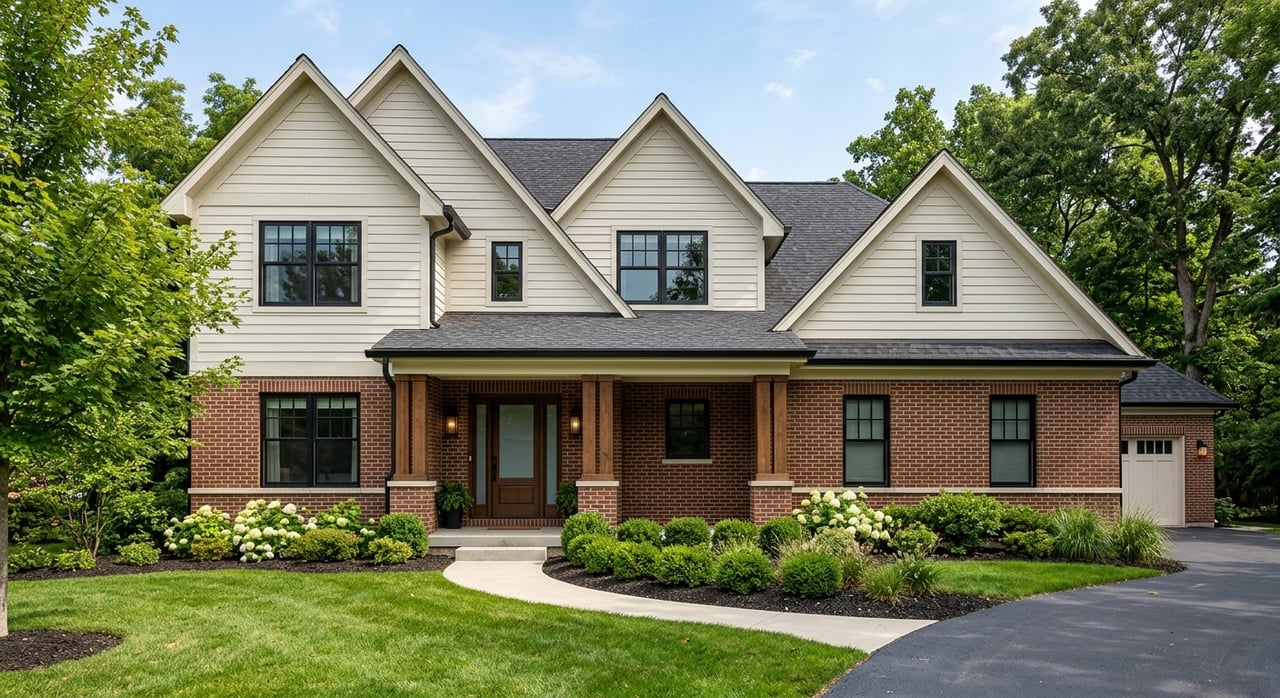
Wondering why one Cincinnati home style feels affordable at first glance while another stretches your budget fast? You are not imagining it. In Cincinnati, the look of a home matters, but your real budget is usually shaped by a mix of neighborhood, age, condition, and long-term costs. This guide breaks down common Cincinnati home styles and what they can mean for your budget so you can shop with more clarity and confidence. Let’s dive in.
Why style alone is not enough
In April 2026, the REALTOR Alliance of Greater Cincinnati reported a median sold price of $324,000, while Zillow’s Cincinnati home value data showed an average home value of $252,784, a median sale price of $239,167, and a median list price of $268,000. Different sources measure the market in different ways, but together they show a citywide baseline in the mid-$200,000s to low-$300,000s.
That said, Cincinnati is not a market where style alone tells you what a home should cost. Neighborhood values vary widely. Zillow lists Clifton at $478,706, Avondale at $152,911, North Avondale at $302,147, CUF at $263,268, and Northside at $247,196, which shows how quickly the budget picture can change even before you look at finishes or square footage.
Why Cincinnati home styles vary so much
Cincinnati has an older housing stock and a long architectural history. The city notes that early residential growth clustered in areas such as the West End, Over-the-Rhine, Lower Price Hill, East End, Riverside, and Prospect Hill. Later growth in the auto era expanded styles like Colonial Revival, Bungalow, and Tudor Revival into neighborhoods including Pleasant Ridge and Westwood.
That history still affects what you see on the market today. According to the city, 94% of single-unit housing structures are detached and 6% are attached row-home structures. The city also reports that 91% of owner-occupied housing was built before 1980, and 64% was built before 1950, which means age and upkeep are major budget factors in many Cincinnati homes.
Historic row houses and urban attached homes
Historic row houses and attached homes often stand out for their character, walkable locations, and brick detail. In places like Over-the-Rhine, the city identifies brick as a character-defining material, along with zero setbacks, aligned openings, stoops, and stone foundations. These homes often appeal to buyers who want a strong sense of place and historic charm.
From a budget standpoint, you may be paying for scarcity, location, and architectural detail more than raw square footage. A practical planning range for these homes is about $250,000 to $450,000+, with renovated or landmark-adjacent properties often trending higher.
If the home is in a local historic district, exterior changes may need review through the Historic Conservation Board and require a Certificate of Appropriateness. That does not mean improvements are off the table, but it can add time and planning to your renovation budget.
Brick traditional homes
Brick traditional homes are a big part of the Cincinnati conversation because brick was an early and popular building material in the city. Many buyers like these homes for their classic look and the sense of durability they can offer.
Still, a brick exterior does not automatically mean lower total ownership cost. In older homes, the bigger budget questions often involve the roof, windows, electrical system, HVAC, insulation, kitchen, and baths. For planning purposes, a common budget band for brick traditionals is about $275,000 to $650,000+, depending on neighborhood, lot size, and renovation level.
This is one of the easiest styles to misread. A well-kept brick home may feel like the safe budget choice, but if major systems are dated, your true cost can rise quickly after closing.
Bungalows
Bungalows are often tied to Cincinnati’s 20th-century expansion and remain popular in neighborhoods linked to that era, such as Pleasant Ridge and Westwood. Buyers are often drawn to their manageable size, charm, and detached-home layout.
For many buyers, bungalows can be one of the more approachable entry points into detached homeownership. A reasonable planning range is about $225,000 to $450,000+, with the upper end driven by renovations and neighborhood.
The trade-off is that many bungalows are older homes, so purchase price is only part of the picture. If you love the style, it makes sense to leave room in your budget for updates over time rather than spending every dollar on the initial purchase.
Townhomes
Townhomes and other attached homes are a smaller slice of Cincinnati’s housing stock, which makes them more of a niche option than the default. They can appeal to buyers who want less lot maintenance or who hope to buy in a location that might be harder to reach with a detached home budget.
A practical planning range for townhomes in Cincinnati is about $250,000 to $500,000+. In downtown, near-downtown, or premium infill areas, pricing can move above that range.
This is where location can completely change the story. In some areas, an attached home may lower your entry price. In others, the location premium may offset much of the savings you expected from having less land or a smaller footprint.
Newer suburban builds
Newer suburban builds usually bring a different kind of budget math. You are often paying more up front for turnkey condition, newer finishes, and lower near-term repair risk. That can make the first-year budget feel heavier even if maintenance needs are lower in the short term.
A practical planning range for newer suburban builds is about $350,000 to $700,000+, with larger lots and custom finishes pushing higher. For buyers comparing older resales with newer homes, the question is often whether you would rather pay more now for convenience or less now with a plan to update over time.
Cincinnati also allows accessory dwelling units in single-family zones, effective October 2, 2023. For some buyers, that creates added flexibility for multigenerational living or future rental use. The city also notes that its residential tax abatement program can apply to increased valuation from new construction or renovation, allowing owners to pay taxes on the pre-improvement value for 10 to 15 years when eligible.
Hidden budget drivers to watch
Neighborhood matters most
The same style can fit a very different budget depending on where it sits. The spread between neighborhood values like Avondale at $152,911 and Clifton at $478,706 is a strong reminder that location may matter more than the style label on the listing.
If you are comparing two homes with similar square footage and similar finishes, the neighborhood can still create a major price gap. That is why style should always be viewed in local context.
Age affects repair costs
Because so much of Cincinnati’s housing stock was built before 1980, and much of it before 1950, repairs and updates should be part of your early planning. Older homes can offer character and established settings, but they may also come with more system-related costs over time.
When you tour homes, it helps to think beyond cabinets and paint color. Ask yourself how the age of the home might affect your budget during the first few years of ownership.
Historic status can affect timelines
Historic district rules are meant to preserve neighborhood character, but they can also shape your renovation process. Exterior work in locally designated districts must go through city review.
If you are drawn to older urban homes, that review process should be treated as part of your overall budget and timeline. Even when the improvement is allowed, approvals and compatible materials can affect cost.
Property taxes deserve a close look
Hamilton County says 2026 is a triennial appraisal year, with new values effective on the January 2027 tax bill. The county auditor also notes that buyers can estimate taxes using the current distribution on a property page and the purchase price, but future levy changes are not included.
That means your payment after closing may not stay exactly where it starts. If you are comparing home styles and neighborhoods, property taxes should be part of the side-by-side budget review.
How to match style with your real budget
If you are just starting your search, it helps to think in layers rather than labels. Instead of asking only, “Can I afford a bungalow?” or “Can I afford a brick traditional?” ask a fuller question.
Use this checklist:
- What is the likely price range for this style in the neighborhood you want?
- How old is the home, and what systems may need updates?
- Is the property in a local historic district?
- What are the likely property tax implications?
- Are you paying more for turnkey condition, or saving up front and planning future improvements?
That approach gives you a more realistic picture of what ownership may feel like after closing. It can also help you avoid buying a home that looks right on paper but strains your monthly comfort level.
What this means for buyers and sellers
If you are buying, Cincinnati’s mix of home styles gives you real options, but it also rewards careful planning. The best-fit home is not always the one with the lowest list price or the most eye-catching architecture. It is the one that fits your full budget, timeline, and comfort with repairs or updates.
If you are selling, style can help shape buyer interest, but pricing still needs to reflect neighborhood, condition, and market context. A charming brick home or bungalow may attract attention quickly, but buyers will still compare age, updates, and carrying costs when deciding what to offer.
Working with local guidance can make those trade-offs easier to understand. When you know how style, location, and long-term costs interact, you can make a more confident move.
If you are weighing home styles in Cincinnati or getting ready to sell, The Woehrmyer Team can help you understand how neighborhood, condition, and pricing come together so you can move forward with a clear plan.
FAQs
What do Cincinnati bungalows usually cost?
- In Cincinnati, bungalows often fall in a planning range of about $225,000 to $450,000+, depending on neighborhood and renovation level.
Are brick homes in Cincinnati cheaper to own?
- Not always. A brick exterior may feel durable, but older roofs, windows, electrical, HVAC, insulation, and interior updates often have a bigger impact on total ownership cost.
Do historic Cincinnati homes come with extra rules?
- Yes, if a home is in a locally designated historic district, exterior work must go through city review and may require a Certificate of Appropriateness.
Are townhomes common in Cincinnati?
- Attached homes are a smaller part of the city’s housing stock. The city reports that 6% of single-unit housing structures are attached row-home structures.
How much do newer suburban homes cost in Cincinnati?
- A practical planning range for newer suburban builds is about $350,000 to $700,000+, with larger lots and custom finishes pushing above that.
Why does the same Cincinnati home style vary so much in price?
- In Cincinnati, price is shaped by neighborhood, age, historic status, condition, and tax treatment, not just architectural style.